Engineering, news, ideas
The tech world, without the noise.
A focused stream of engineering blogs, tech news and independent writing. One feed, no algorithms.
Dispatches from O'Reilly: Inside a software factory
Go from vibe coding to generating clean, maintainable code
Trying to get our Arms around AI efficiency
Ryan sits down with Alex Spinelli, Senior Vice President of AI and Developer Platforms at Arm, for a conversation about bringing ML capabilities to edge devices, adapting software tools to meet the unique demands of autonomous agents, and the critical importance of prioritizing functional safety as artificial intelligence transitions into the physical world of robotics.
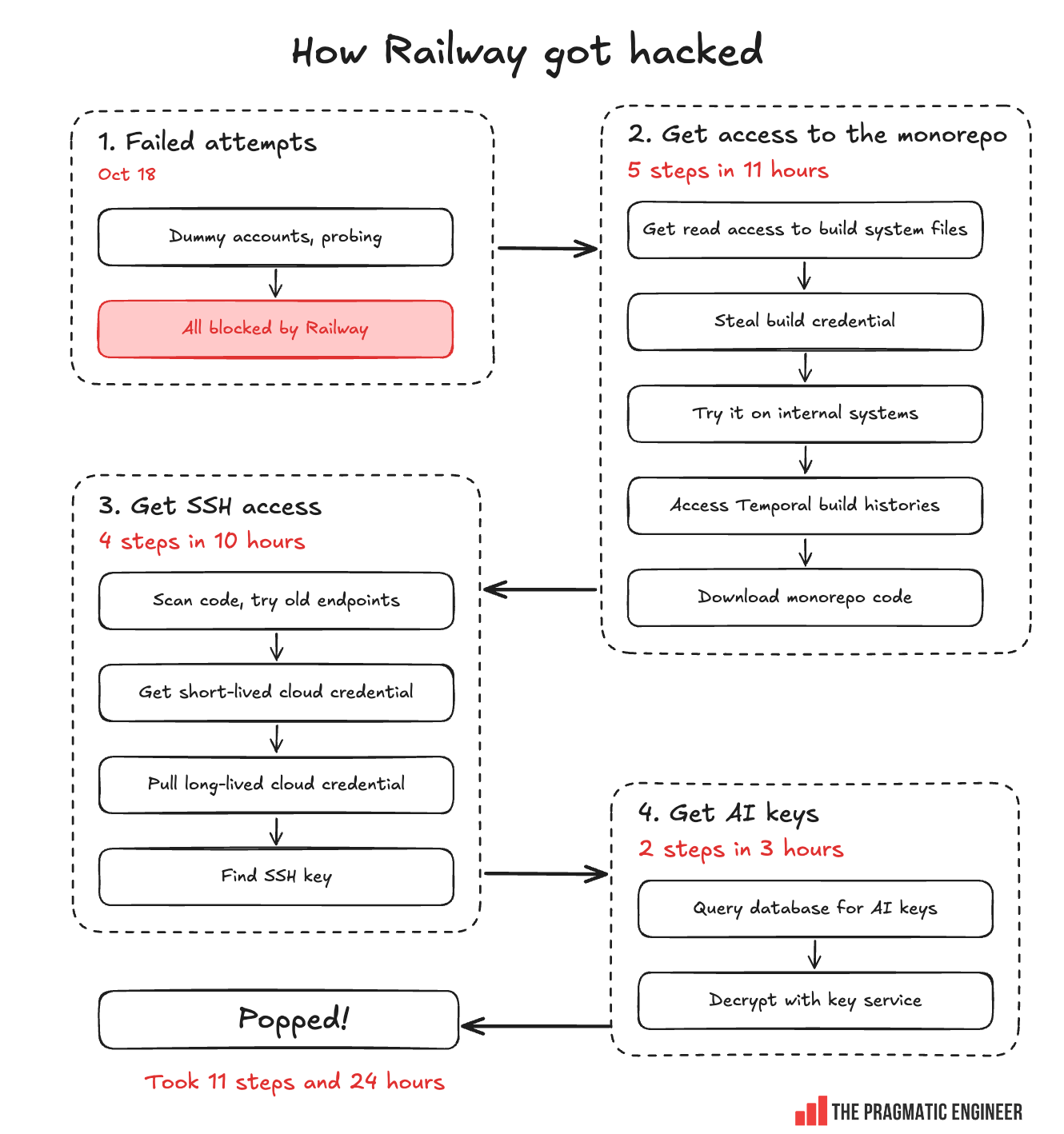
The Pulse: What can we learn from the Railway hack?
Cloud platform Railway published a detailed postmortem about their recent hack in which the attacker likely used no-safeguards AI models. Railway hardened its systems as a result.
Chaos, then control: the maturity model most AI rollouts skip over
Every engineering org has rolled out AI coding tools by now, but far fewer have actually seen the outcomes they were hoping for.
The pioneering coding tricks that built Doom and Quake
Ryan chats with John Romero, creator of the WAD file and the video game Doom, about the self-modifying code and blitting techniques that made Wolfenstein run so fast on early PCs, the mod-friendly architecture that turned Doom into a cultural phenomenon, and why the raw creative problem-solving of Quake proves that human ideas will always beat AI coding agents.
Your coding agent shouldn't grade its own homework
AI coding agents can now write design docs, mock up frontends, and implement entire projects end to end. But can they be trusted to verify that their own code actually works?
Agentic search doesn't find pages, it assembles answers
Ryan sits down with Jeff Wang, co-founder at EXA, to talk about the huge scale required to support trillions of agentic searches, the technical complexities of building custom embeddings and performant vector databases from scratch, and the need to dedupe the massive amounts of redundant content on the web to deliver high-trust answers.
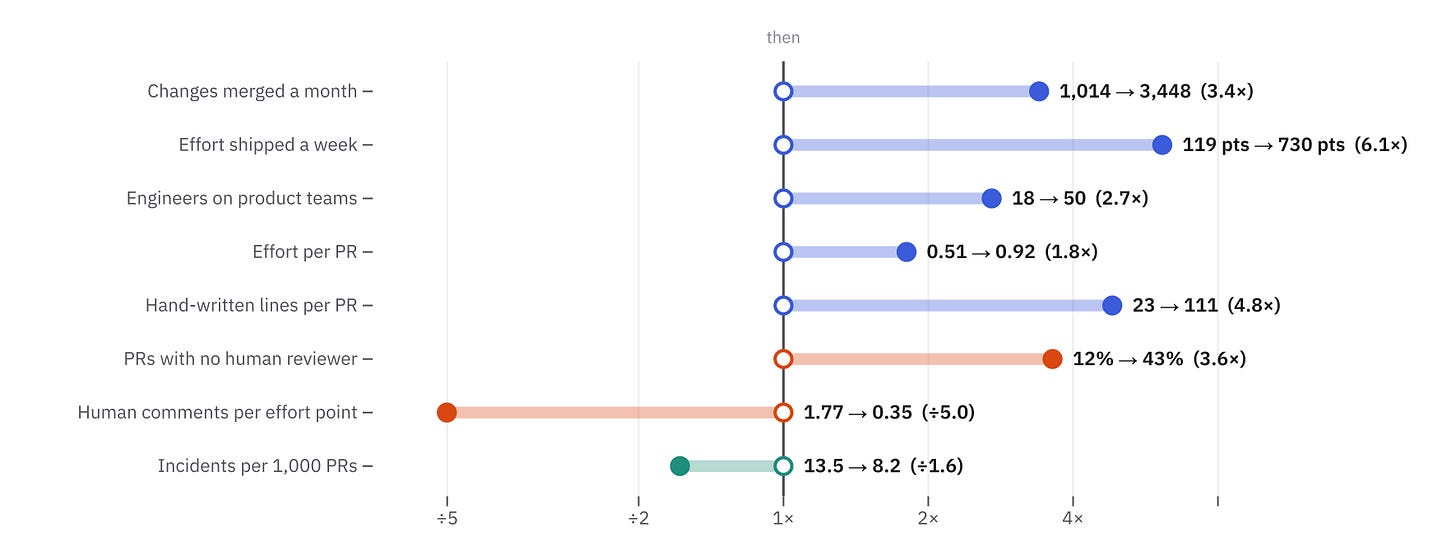
The Pulse: Details of incident.io’s AI spend
The resiliency startup has slashed the amount it spends on AI; down from $4,500 per dev, per month, in August, to $1,600 now.
How do you hire a human? Q&A with Tom Harvey, Stack Overflow technical recruiter
Everybody's resume is perfect now, so how do you find the perfect teammate?
Customer support is the gnarliest AI problem
Ryan chats with Ahmad Al-Dahle, CTO at Airbnb, about deploying multi-party AI agents to tackle the uniquely gnarly problem of customer support, how a moving target of rigorous evaluations helps engineers balance latency against accuracy, and the ways in which AI coding tools demand an even higher level of judgment from software engineering teams.
Never Share Your Password Again — The OAuth 2.0 Solution
Welcome to life in the chip age
Ryan sits down with Rakesh Kumar, professor of computer engineering at the University of Illinois Urbana-Champaign, to talk about the astounding complexity of manufacturing modern semiconductors, the massive environmental and geopolitical footprint of AI data centers, and how AI models are rapidly shifting the future of chip design.
Don’t Build the Reusable Component Yet
Your .NET parallel loop can become serial in a one-CPU container
CPU-based defaults can leave an I/O-heavy loop processing one record at a time. Raising the limit helps, but each downstream service still needs a concurrency budget it can handle.
Oh, your agents need OAuth2, too
Recorded at LDX3 by LeadDev, Ryan chats with Dan Moore, Senior Director of CIAM Strategy and Identity Standards at FusionAuth, about adapting established OAuth2 protocols for the agentic era, the security necessity of giving autonomous AI agents their own distinct identities, and how AI coding tools are shifting developers' focus toward solving core business problems.
The Pulse: Time to rethink software security because of AI?
A month’s worth of security breaches in a single day – will things get worse before they improve?
It’s ok that computers are (sometimes) better than us
Ryan is joined by Charity Majors, co-founder and CTO at Honeycomb, for a conversation about applying the concept of immutable infrastructure to software development to treat code like cattle instead of pets, shifting the paradigm of system specifications to accommodate the rapid influx of AI-generated code, and navigating the complex ethical boundaries between system observability and human surveillance in modern technology ecosystems.
The reports of Stack Overflow's death are greatly exaggerated
I’ve seen the recent predictions about Stack Overflow’s demise. They make for compelling headlines, but they confuse a change in how people access knowledge with the disappearance of the knowledge—and the company—behind it.
A JSON schema Is not an AI governance layer
The AI governance argument is happening one layer above the code that actually stops your agent.
Delivering controlled and concentrated context
Check out the new features and capabilities now available in Stack Internal and Stack Internal Community. Try Stack Internal for free by visiting stackinternal.com.
Elevators, toasters, and the birth of Java
Ryan sits down with James Gosling, creator of Java at Sun Microsystems, to talk about the early networking friction that drove the need for interconnectedness, the stringent reliability requirements of consumer electronics companies that inspired the Java virtual machine, and the evolution of garbage collectors that allow Java to handle large-scale concurrent memory management.
Rumors of the SaaS demise are greatly exaggerated
Recorded on the floor of LDX3, Ryan chats with Nivia Henry, an engineering leader most recently at Netflix, about the reality of the supposed SaaS apocalypse, the complex calculus of the modern build-versus-buy decision in the era of AI, and the critical importance of understanding system architectures to manage long-term infrastructure costs.
The Regression Tests Nobody Writes: Capturing How Software Actually Behaves
Is AI really reshaping the developer market?
The market for developer jobs is shrinking, and it's getting harder to hire the engineers you need.
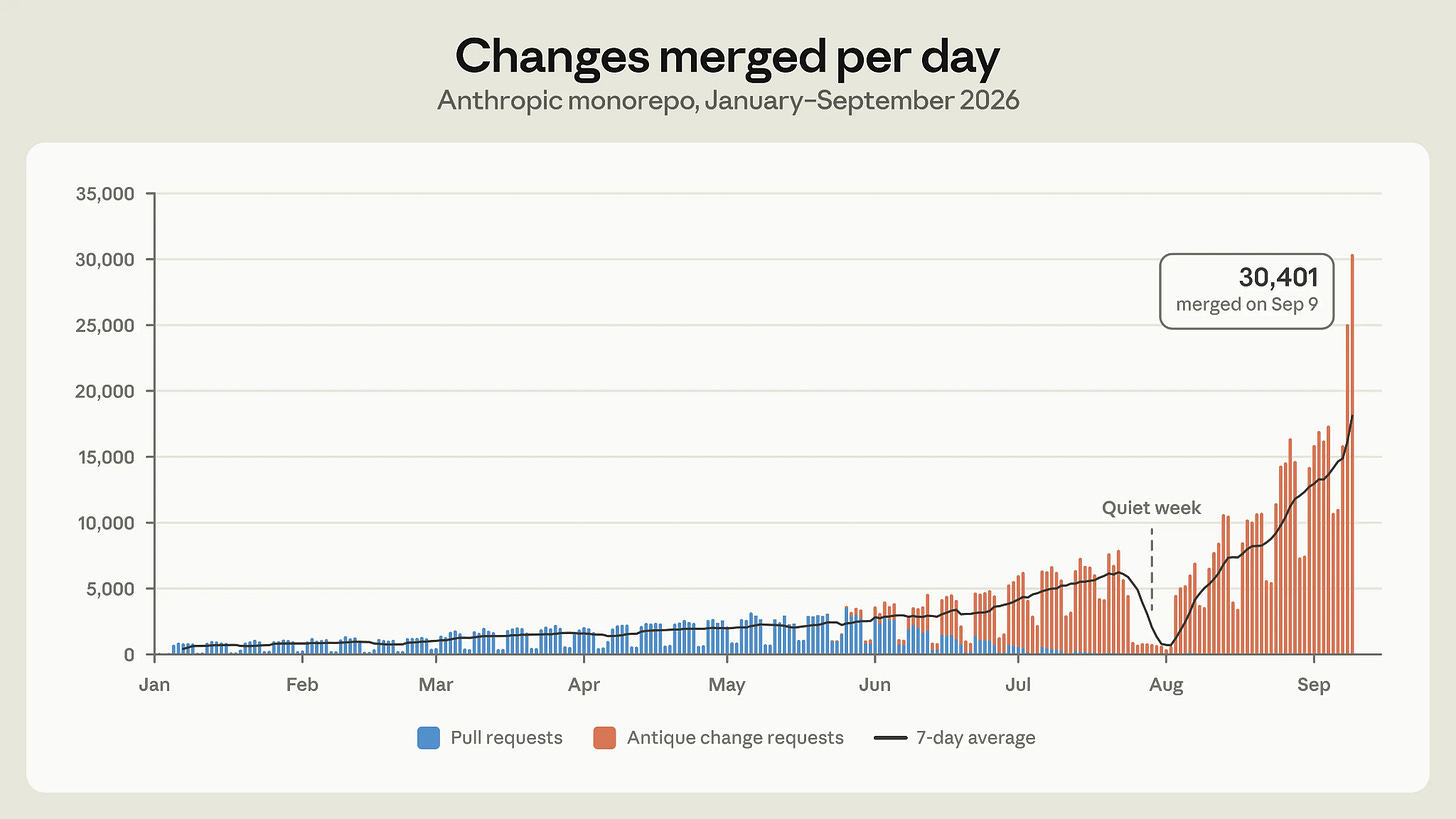
The Pulse: Anthropic builds its own source control system
Git had too many performance problems at 30,000 PRs per day, so Anthropic built its own. I talked with the team, including asking why they didn’t open source its new system, ‘Scion.’
Building Immersive Virtual Economies: An Introduction to KursarScript (KSPL)
Survey Says: You'll swap the model, but everything you build around it is staying put
Earlier this month, my team at Stacklok surveyed 520 technical leaders to understand whether they were concerned about being locked into frontier labs. The data says they’re already swapping models in and out, but the trap they’re concerned about is the layer on top of the model.
Don't forget about the UI for AI
Recorded at OpenAI Dev Day 2026, Ryan sits down with Andrew Ambrosino, member of the technical staff at OpenAI, for a conversation on OpenAI's strategy for merging ChatGPT and Codex into a unified experience, the advantages of localized computer access in their successful desktop application, and the technical hurdles of constructing ChatGPT Spaces to support real-time multi-agent collaboration.
Production-grade LLMs and agents: a field guide
A maturity model for taking agents from an impressive demo to a system people can depend on — with a self-assessment and the map to a deep-dive on each layer.
AI says you’re right, formal methods say you’re wrong
Ryan is joined by Gabriela Moreira, CEO at Quint, about why formal specification languages like TLA+ are essential for catching system design flaws before writing code, how Quint brings developer-friendly syntax and executability to formal methods, and the ways trace validation and model-based testing can verify AI-generated code against real-world production data.